

Choosing a pipe cutting machine factory from thousands of miles away is risky CNC controllers 1. I run a metal processing equipment 2 plant in Wenzhou, and I have seen buyers lose months to fake suppliers. One bad choice means delayed delivery, poor quality, and painful after-sales costs. A structured video audit solves most of that risk before you wire a single dollar.
To assess a pipe cutting machine factory through a video audit, request a live end-to-end walkthrough covering raw material inspection, machining, assembly, testing, and packing. Verify calibration stickers, QC records, safety systems, and run a live cutting demo on your material. Score each area and document evidence before committing.
A video audit is not a replacement for an on-site visit. But it is a powerful screening tool. In this guide, I will walk you through exactly what to look for, what to ask, and which warning signs should make you walk away.
Last year, a procurement manager from Ohio asked me to walk him through our workshop on a live call. His first request surprised me: he wanted to see our material storage area 3, not our machines.
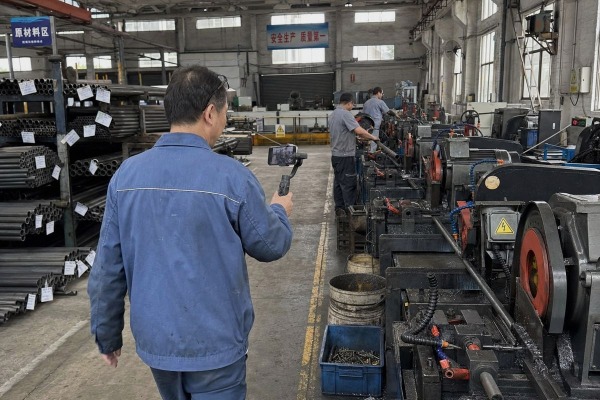
During a video audit, follow the entire manufacturing process from raw material storage to packing. Check for logical material flow, clear zoning, active machines matching claimed production capacity, calibration stickers on equipment, organized tooling, and real workers performing real tasks rather than staged showroom footage.

That buyer was smart. A virtual factory tour that only shows polished "hero shots" of finished machines tells you almost nothing. The camera should move, and it should move in the same direction the material moves. When we host video audits at our Wenzhou facility, we start at incoming steel storage, then follow the path through machining, frame welding, assembly, electrical cabinet wiring, and finally testing and packing. If a supplier resists that sequence, ask why.
Here is a simple cross-check that exposes "shadow workshops." Count the active machines and operators visible on screen. Then compare that with the factory's claimed monthly output. If a supplier claims 50 machines per month but you see three workers and two idle stations, part of the production is likely outsourced to an unknown subcontractor. That breaks your supply chain management and your traceability.
Operational maturity shows up in small details. Look for these on camera:
| What to Observe | Good Sign | Warning Sign |
|---|---|---|
| Raw material area | Labeled racks, lot tags, separated from finished goods | Mixed piles on the floor |
| Aisles and passages | Clear, marked walkways | Blocked paths, scattered tooling |
| Quarantine/reject zone | Clearly marked and used | No visible defect handling area |
| Workstations | 5S housekeeping, tools in place | Coolant pooling, random parts everywhere |
| Finished goods | Wrapped, labeled, staged for export | Unprotected machines gathering dust |
Ask the operator to zoom in on machine nameplates, serial numbers, and calibration stickers 4. On critical components like CNC controllers or laser sources, maintenance logs prove the equipment is within its service life. A factory that keeps its own machines healthy is far more likely to build durable machines for you.
Our engineers keep a simple rule on the shop floor: if an inspection is not recorded, it did not happen. That rule came from a hard lesson with a rejected export batch early in our company's history.
Verify quality control by asking the camera to show incoming raw material inspection records, in-process checkpoints, and final inspection reports. Confirm measuring tools like digital calipers and thickness gauges are calibrated and actually used on finished cuts, and request a live accuracy demonstration.

Documents are easy to fake in a PDF. They are much harder to fake on a live call. So do not accept scanned certificates alone. Ask the host to walk to the QC station and pick up the actual paperwork on the bench. Are the inspection sheets filled in by hand, dated today, and signed by an inspector? Or do they look printed five minutes before your call? Real quality control standards leave messy, living evidence: travelers moving with parts, red reject tags, corrective-action notes.
An ISO certification 5 tells you a system exists on paper. The video call tells you whether the system is alive. Ask for close-ups of the specific testing tools at the QC station — digital calipers, ultrasonic thickness gauges, and bevel angle protractors — and then ask the inspector to measure a finished cut while you watch. Check for calibration stickers on each instrument. An expired sticker on a caliper is a small thing that reveals a big habit.
This is the single most valuable ten minutes of any video audit. Send your pipe specification in advance — your material, diameter, and wall thickness — and ask for a live "stress test" under realistic load. During the demo:
Also ask about testing and commissioning for finished machines. Every unit we ship runs a continuous trial before packing, and I recommend you ask any pipe cutting machine factory to show that acceptance process live, not just describe it.
There is always a trade-off I discuss openly with buyers: a factory with the newest CNC laser technology is not automatically better than one with older, well-maintained equipment and deep process knowledge. The right questions expose which one you are dealing with.
Ask about machine age and calibration schedules, in-house versus outsourced processes, tooling inventory for different pipe alloys, engineering team size, OEM/ODM customization experience, and real KPIs such as OEE, scrap rate, and test-pass rate. Then verify each answer against visible video evidence.

Questions only work when you can check the answers on screen. So pair every question with a piece of visible evidence. When buyers audit our facility, the sharpest ones use a checklist like this:
| Question to Ask | Evidence to Request on Camera |
|---|---|
| Which processes are done in-house? | Walk to the welding, machining, and wiring stations |
| How old are your key machines? | Nameplates, serial numbers, purchase or maintenance records |
| How do you maintain critical equipment? | Preventive maintenance schedules and repair logs |
| Can you handle different pipe alloys? | Blade and tooling inventory for varied consumables |
| What are your production KPIs? | Screen-share of MES or ERP dashboard with uptime and error logs |
| Do you support customization? | Drawings, past non-standard projects, engineering workstations |
Point nine on my own audit checklist is the blade cabinet. A pipe cutting machine factory that handles complex custom orders in-house will hold a diverse inventory of high-quality consumables for different alloys — carbon steel, stainless, copper, aluminum. A thin, generic tooling shelf often reveals a trader or an assembler, not a true builder. Since we develop non-standard chamfering and cutting equipment ourselves, I know how much specialized tooling real custom work consumes.
Request a screen-share of the factory's MES or ERP dashboard. Real-time machine uptime, downtime, error logs, scrap or rejection percentage, and preventive maintenance completion rates give you data-driven proof of production health. Also confirm the technical specifications of the exact model being quoted match the machine shown on camera. Finally, ask how the smart PLC control program is documented and who supports it after delivery — this connects equipment capability directly to after-sales service, which matters most once the machine is on your floor.
A German distributor once told me he rejected a supplier within ten minutes of a video call. The reason: the factory refused to show live production and kept replaying edited clips. That instinct saved him.
Major red flags include refusal to show live production, missing safety guards or E-stops, workers without PPE, unavailable inspection or calibration records, chaotic material flow, a demo machine that differs from the quoted model, and no visible final testing before shipment.

Red flags rarely appear alone. One sloppy habit usually signals a whole culture. My own standard for supplier verification is simple: judge whether the factory can continuously produce stable equipment, control quality, and reliably deliver overseas orders. Every red flag below attacks one of those three abilities.
| Red Flag | What It Really Means | Which Ability It Breaks |
|---|---|---|
| Only edited clips, no live walkthrough | Something is being hidden or the factory does not exist as claimed | All three |
| Missing guards, interlocks, or E-stops | Weak engineering discipline; the same carelessness enters your machine | Stable equipment |
| No PPE, ignored lockout practices | Poor safety culture and weak management control | Stable equipment |
| No inspection, maintenance, or calibration records | Quality depends on luck, not a system | Quality control |
| Chaotic zoning, no quarantine or scrap area | Defective parts can flow into finished machines | Quality control |
| Demo machine differs from quoted model | Bait-and-switch risk on your actual order | Overseas delivery |
| No final testing or acceptance process | Commissioning problems land on your side of the ocean | Overseas delivery |
Some warnings are subtle. Inspect the scrap metal sorting area on camera; disorganized scrap handling suggests poor material efficiency, and it increasingly matters for ESG-compliant supply chains. Listen to the shop-floor sound during cutting — grinding chatter hints at worn bearings in the factory's own equipment. Check whether fume extraction and spark guards actually run during the demo. And watch how questions get answered. Evasive, delayed, or scripted responses during a live call usually predict how after-sales support will feel a year later.
One buyer objection deserves a straight answer here: yes, a coached team can hide some problems on video, and internal wear or undocumented shortcuts may stay invisible. That is exactly why a video audit should screen suppliers and document evidence — and why high-value orders still deserve an on-site audit or third-party inspection before final acceptance.
A bad supplier costs you months and money. A structured video audit — process flow, quality control, safety, and red-flag checks — protects your order before you ever travel. Screen hard, verify everything, then commit.
1. Technical overview of the computer numerical control systems used in pipe cutting machines. ↩︎
2. Official US government resource for international trade and verifying equipment suppliers. ↩︎
3. The ITC provides institutional guidance on supply chain and material management for SMEs. ↩︎
4. NIST is the authoritative body for measurement standards and calibration procedures. ↩︎
5. Official source for the ISO 9001 quality management standards mentioned in the article. ↩︎
